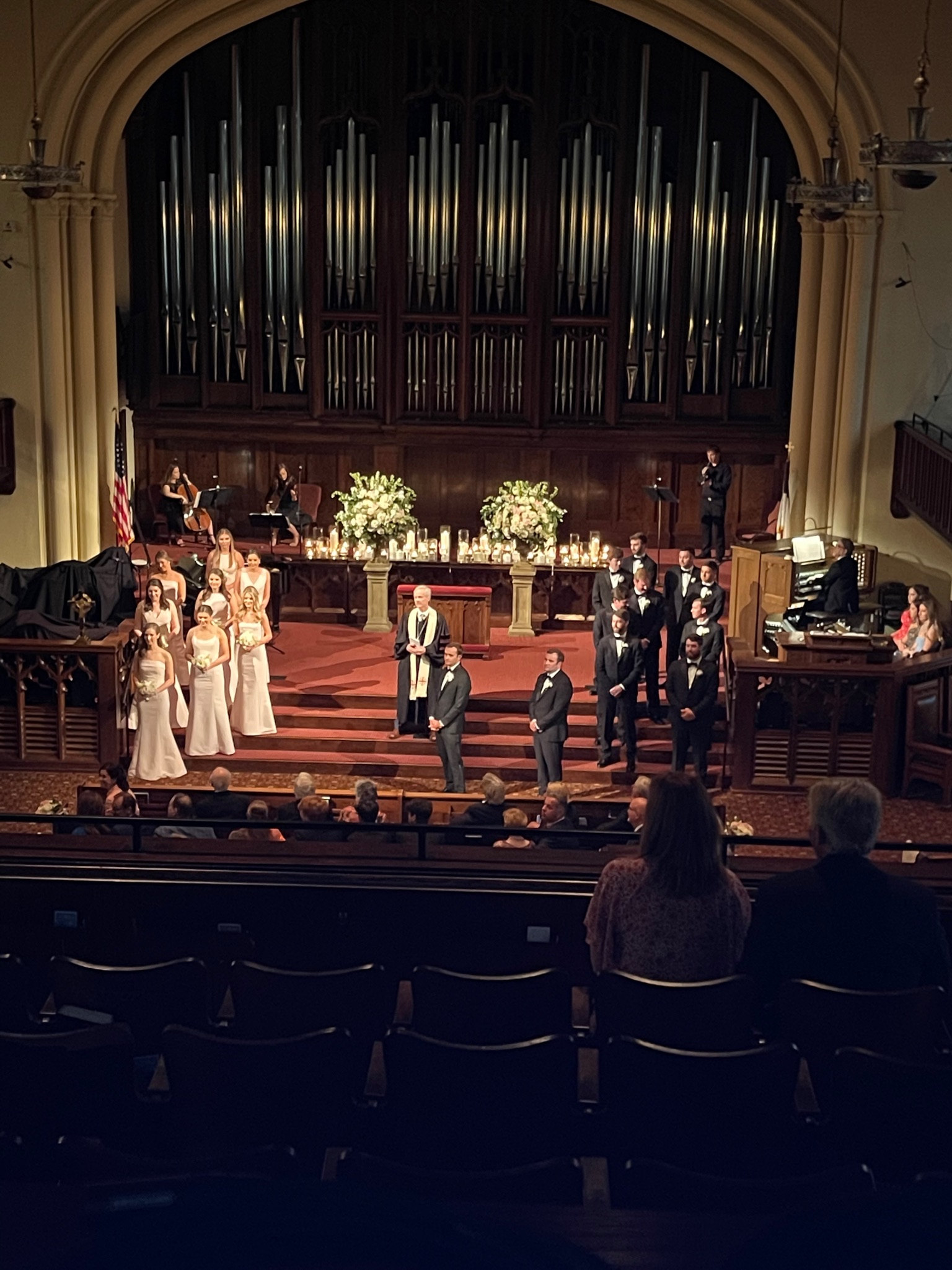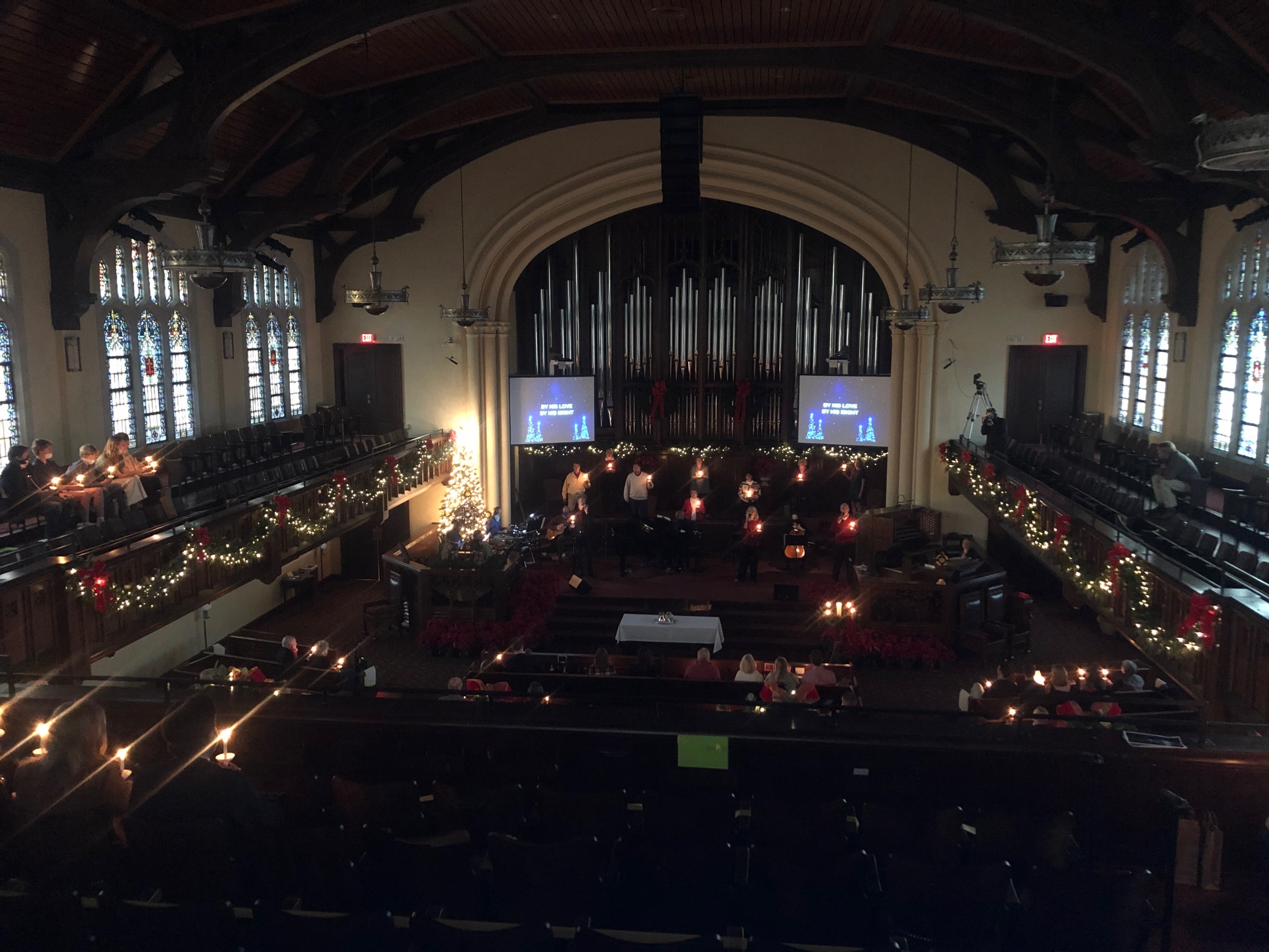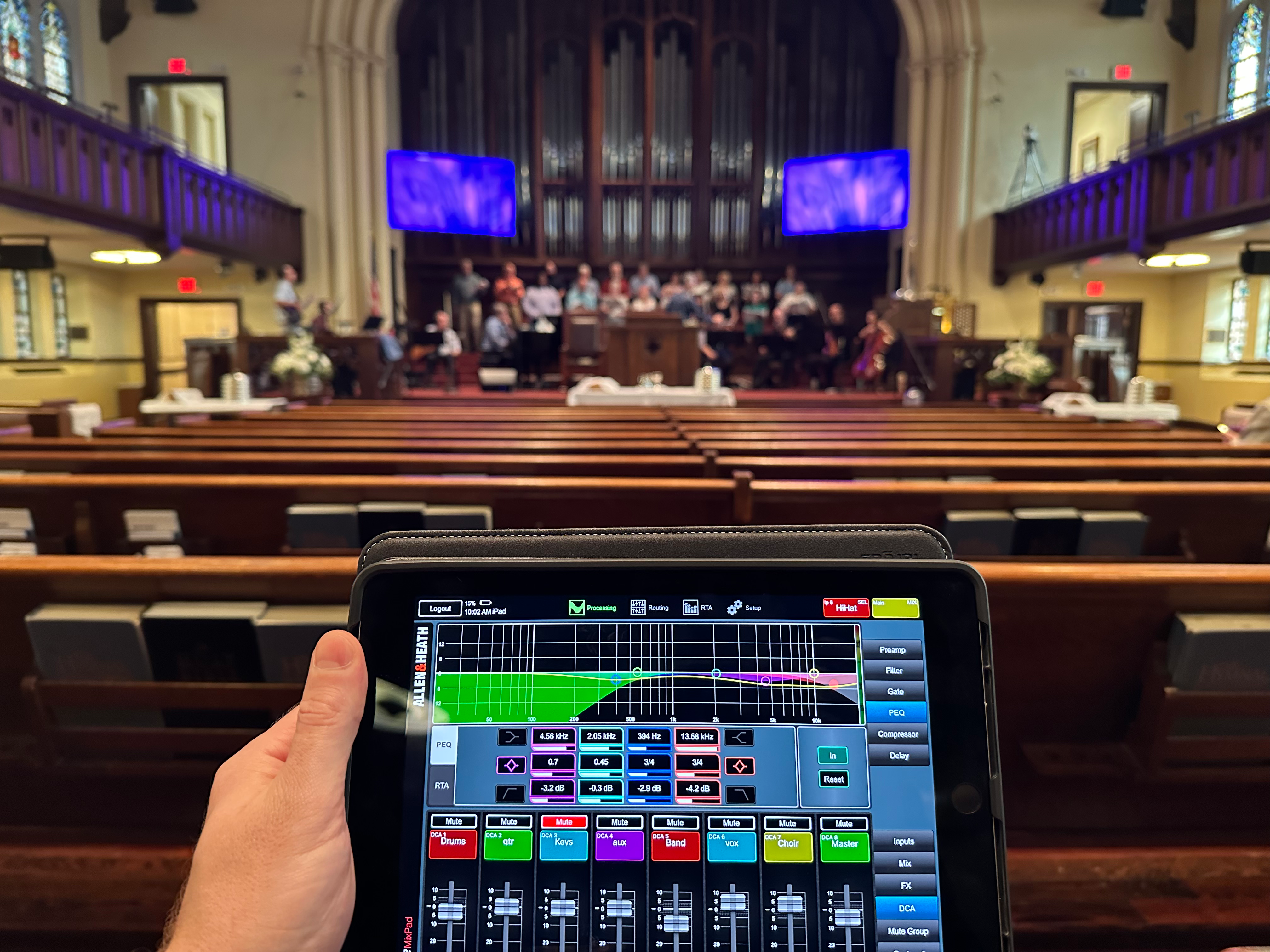
Ten years and counting at one of downtown Baton Rouge's signature campuses — Allen & Heath dLive console with stage mixers, QSC delay speakers walking the room, Panasonic PTZ broadcast with switcher and controller, architectural uplighting on the gothic arch, and the same team back every Sunday morning and weeknight rehearsals.
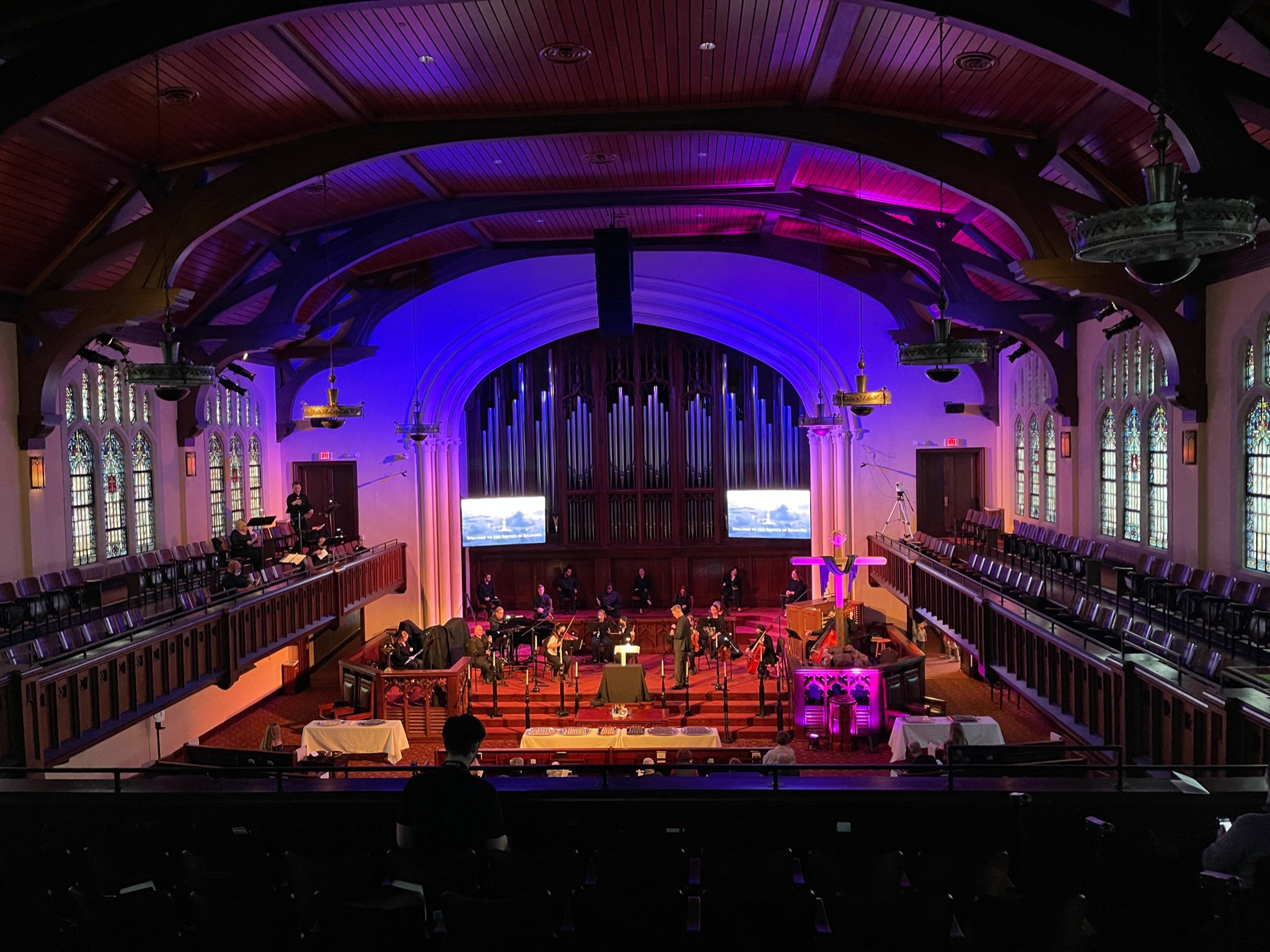
First Presbyterian's worship space is a turn-of-the-century gothic sanctuary on one of downtown Baton Rouge's most beautiful campuses — wood-truss ceiling, carved stone arch over the platform, floor-to-ceiling stained glass on both sides, an organ that anchors the room. The architecture does most of the work, and our job has always been to support that.
Every system we've installed across the last decade had to live inside that constraint: powerful enough to serve a full congregation on Christmas Eve, restrained enough to disappear during a Sunday morning service.


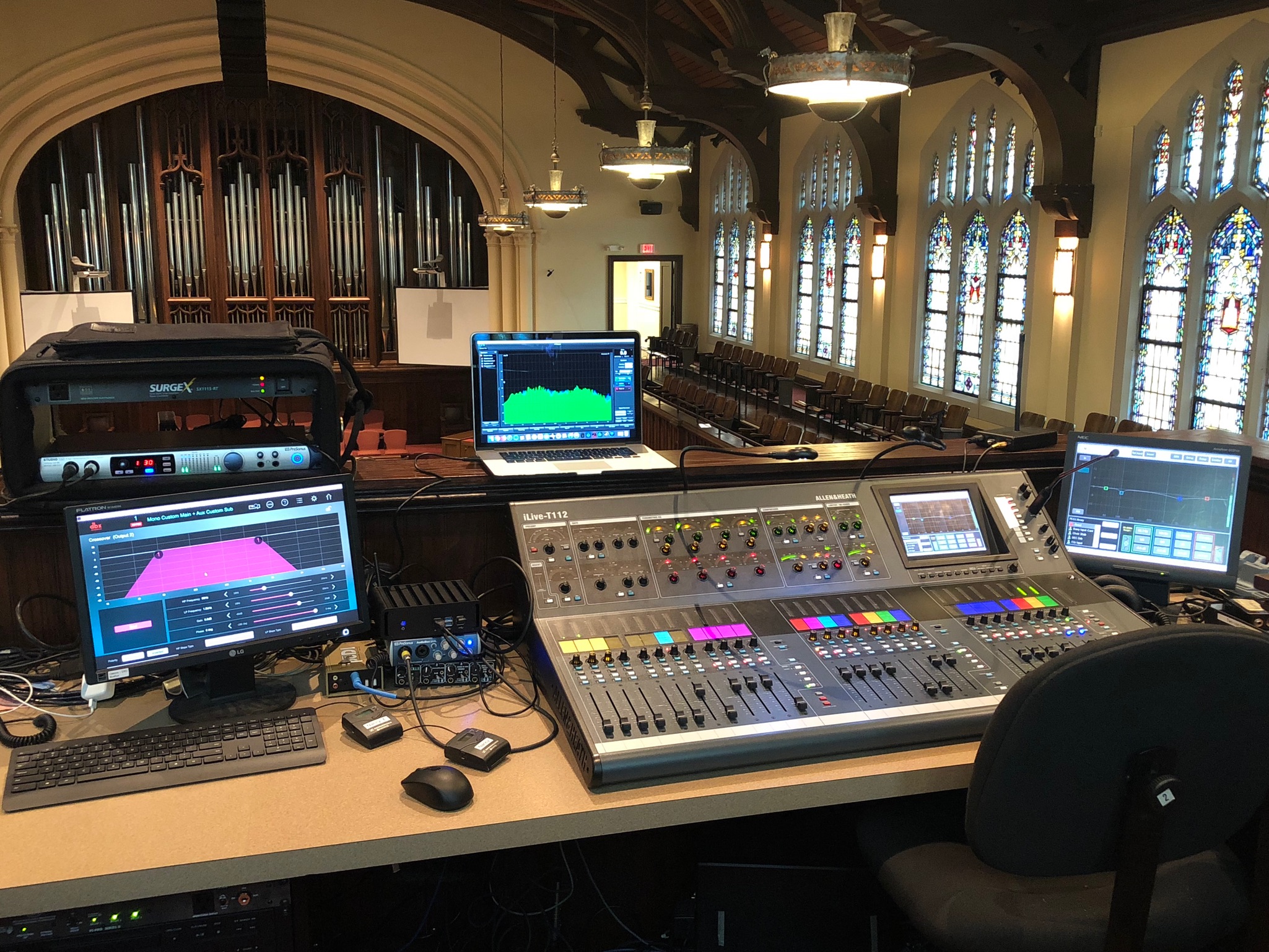
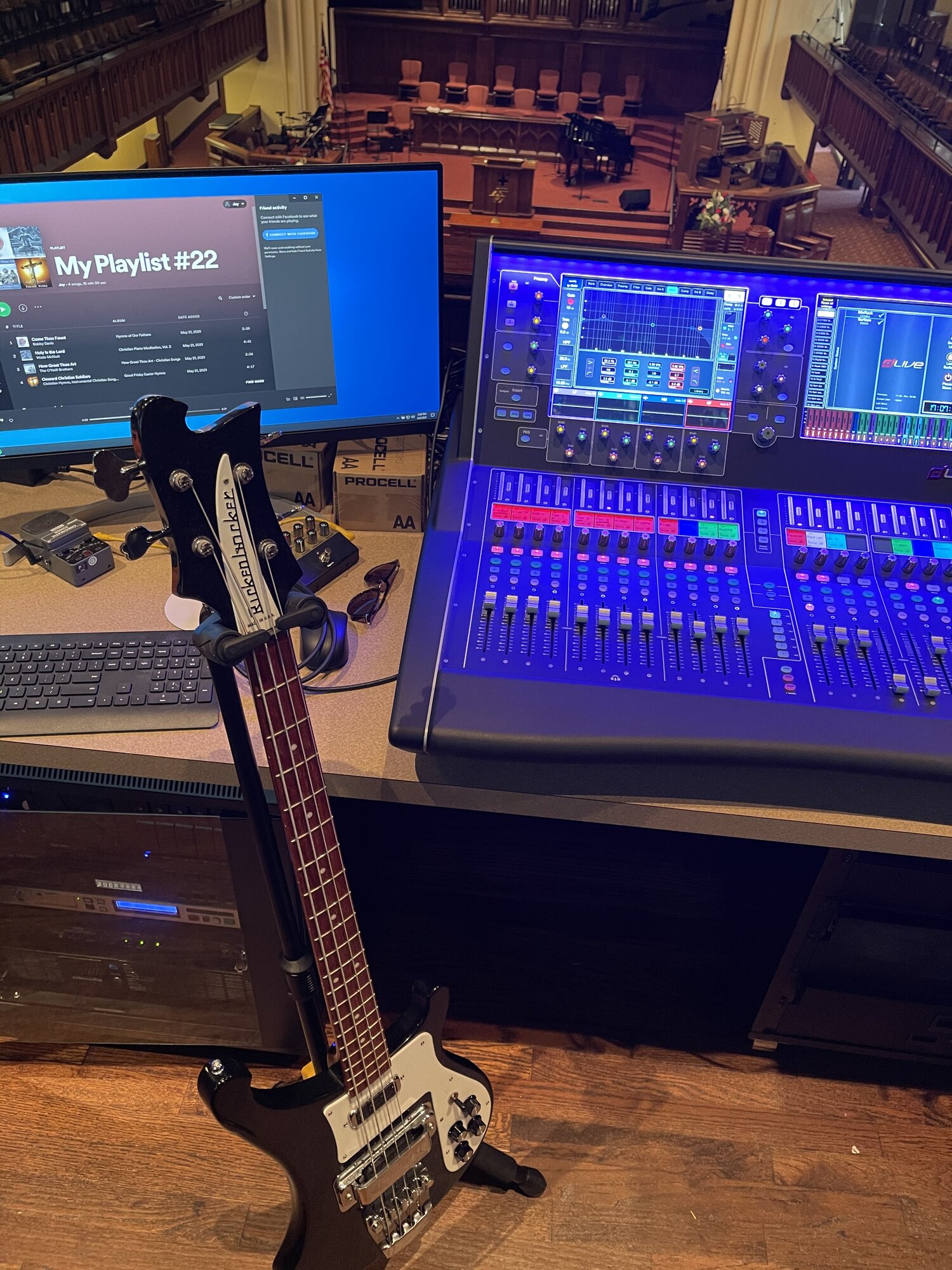
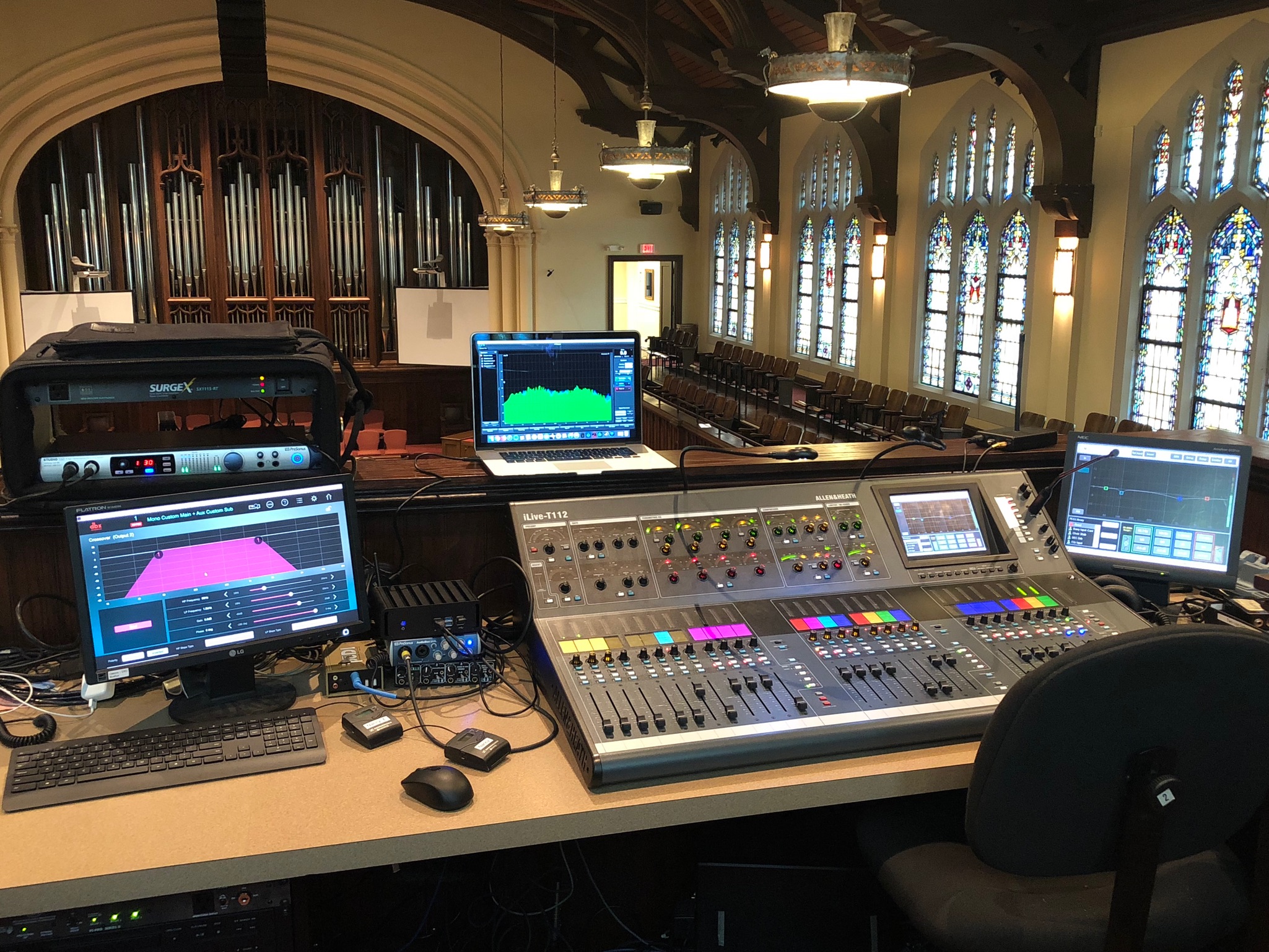
The dLive S-class console anchors front of house, with stage-side dLive mixers handling per-position monitor mixes through the worship team. We added QSC delay speakers down the long room to keep pew-to-pew intelligibility tight under the high gothic ceiling — the kind of layer that disappears when it's working right.
After install we tuned the room with a Smaart RTA — measuring, EQing, and time-aligning until the response felt right both for sermon clarity and full-band Sunday mornings. The Pink Palace team has stayed: back every Sunday morning running FOH and monitors live, and on weeknight rehearsals when the worship team needs another set of ears at the console.


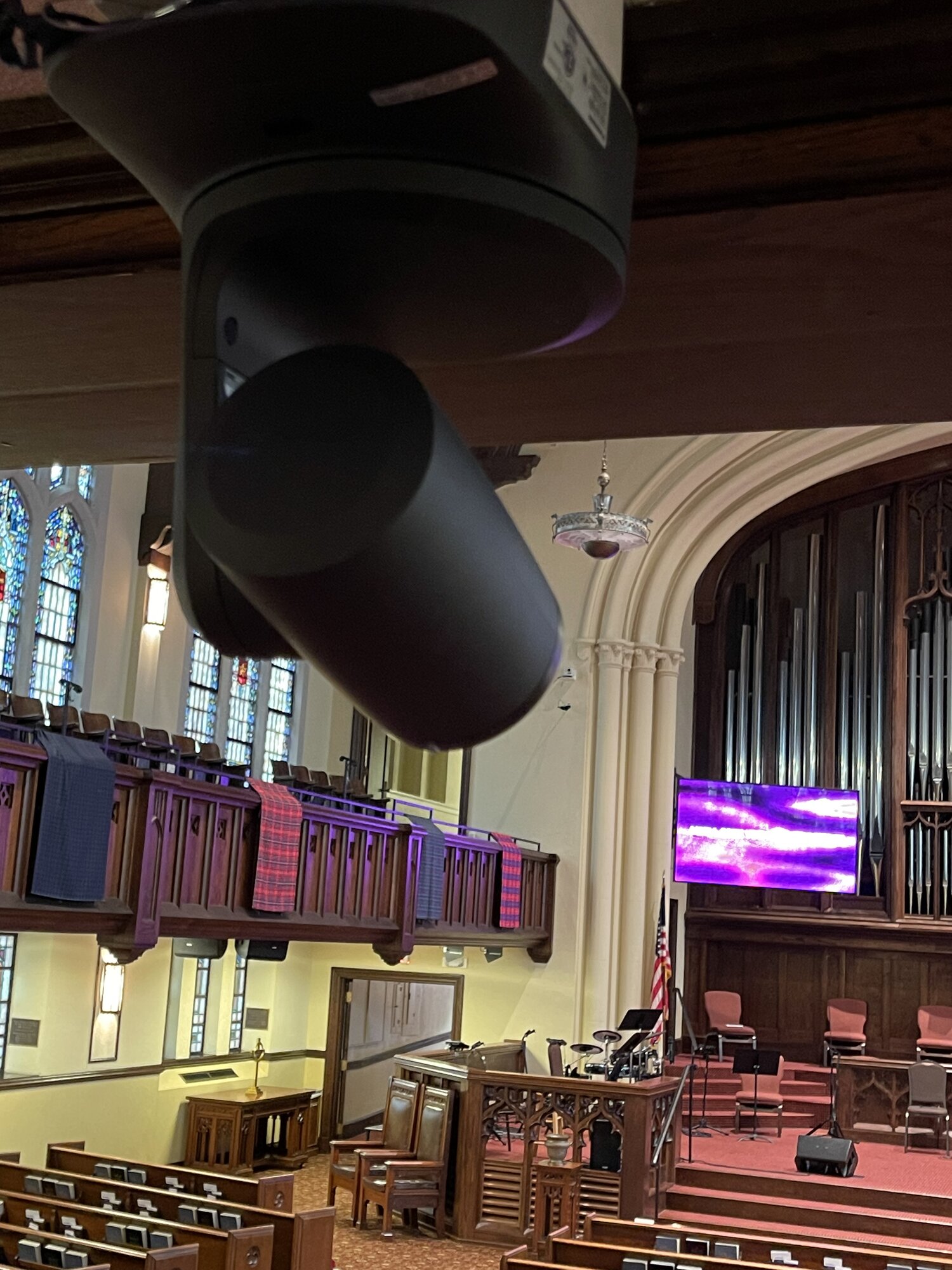
The broadcast install added Panasonic PTZ cameras placed to catch the platform, the choir loft, and wide congregation views — camera positions chosen to keep the visible aesthetic of the room intact. A dedicated switcher and controller route the camera feeds; cabling threaded through the existing balcony structure, hidden in the architecture.
The signal chain feeds both the in-room IMAG screens and the livestream output — same camera positions, same color grade, one production team running both worlds from the booth. The livestream itself was an augment to what already existed: the install added the hardware and signal paths to give the team a real broadcast workflow on top of the original system.

Architectural uplighting on the gothic arch and organ-pipe screen was the most recent phase. The fixtures live tucked at the platform edge and along the back wall — invisible during the day, then carrying the full visual weight of evening services.
Programmed presets give the team one-touch looks for Christmas Eve, Easter, and the regular Sunday cycle. Deep blues for advent and candlelight, warm ambers for traditional services, full white for events that need the room to read as itself.

Ten years at FPCBR is a console added here, a camera path there, delay speakers walked down the room, architectural uplighting on the gothic arch — and the same team back every Sunday morning and weeknights, running mixes for the people running the service. A decade downtown, one phase at a time.